
千字文 in 42 cards › Card 8
Card 8 of 42 · lines 43–48
知过必改 得能莫忘
Pinyin
English
43
知
过
必
改
know
fault
must
correct
When you know your fault, be sure to correct it;
44
得
能
莫
忘
gain
ability
do not
forget
what you have learned to do, do not forget.
45
罔
谈
彼
短
do not
talk about
others'
shortcomings
Do not talk about the faults of others;
46
靡
恃
己
长
do not
rely on
your own
strengths
do not rely on your own strengths.
靡 in the sense of "not" is read mǐ.
47
信
使
可
覆
your word
let
can be
put to the test
Let your word be such that it can be put to the test;
48
器
欲
难
量
capacity
should be
hard
to measure
let your mind be too wide to measure.
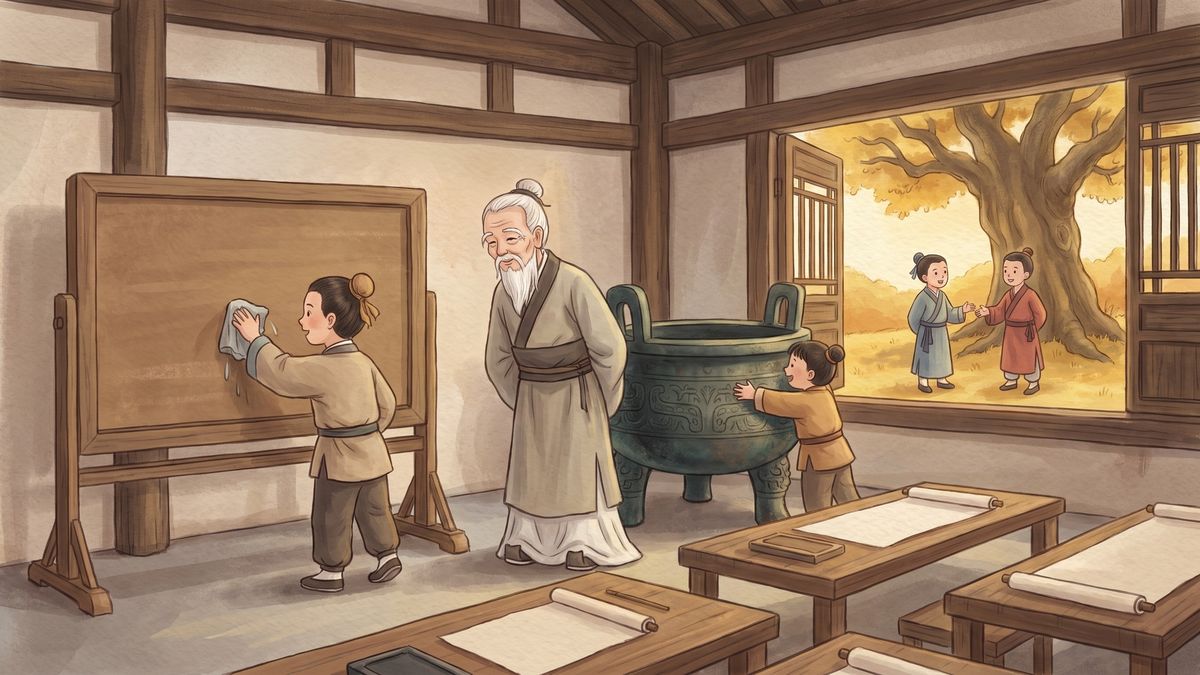
器, a vessel, stands for what a person can hold.
Two or three days with this card 练习
- First day: copy and read. Copy each couplet once by hand, slowly, stroke by stroke. Read it aloud with the pinyin: the small strokes under the characters show the melody of the line.
- Second day: recite. Say each couplet two or three times without looking: one line, one breath. If you slip, finish the line, then say it again.
- A third day if you need it. Recite all six lines in one go, then write two of them from memory. Move on when the card sits.
Weave back 温故
Before you start this card, say these again from memory. Look only when you are stuck.
The card before: card 7
- 盖此身发Now, this body and hair of ours
- 四大五常belong to the four elements and the five virtues.
- 恭惟鞠养Think with respect of how your parents raised you:
- 岂敢毁伤how could you dare to harm that body?
- 女慕贞洁Women should admire the chaste and pure;
- 男效才良men should follow the able and good.
Four cards back: card 4
- 龙师火帝The Dragon Master and the Fire Emperor,
- 鸟官人皇the Bird Official and the Human Sovereign:
- 始制文字in their time writing was first created
- 乃服衣裳and people began to wear clothes.
- 推位让国Those who gave up the throne and handed over the realm
- 有虞陶唐were Shun of Youyu and Yao of Taotang.